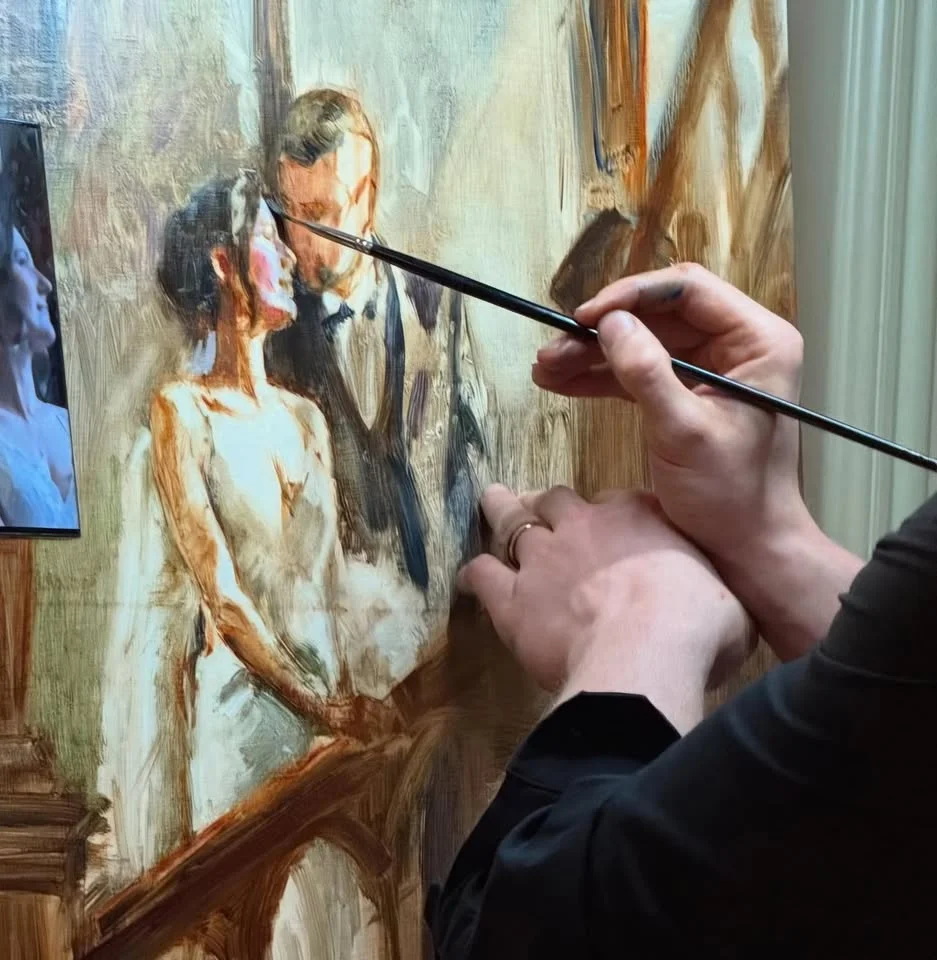
Stop Asking Couples How Much Detail They Want
The most common question in commissioned wedding art might be the most expensive one in your enquiry process. Here’s what to ask instead.
“How much detail would you like?”
If you’re a live wedding painter or guest illustrator, you’ve probably asked this in almost every enquiry you’ve ever handled. It sounds professional. It sounds thorough. It sounds like exactly the kind of question a careful artist should ask.
It’s also close to meaningless. And it’s quietly costing you bookings.
Why Asking About “Detail” Stalls Live Art Enquiries
Detail isn’t a dial a couple can turn up or down. It’s a handful of separate creative decisions wearing one coat, and almost nobody separates them out:
- Should the painting be just the two of them, or the whole room?
- Should the guests be recognisable people, or shapes and colour?
- Does the venue need to be identifiably their venue, or is it a beautiful backdrop?
- Is it the ceremony, the speeches, or the first dance?
Answer those questions differently and you get two paintings that look nothing alike, take a wildly different number of hours, and land at very different prices. Yet an artist could honestly describe both of them as “highly detailed.”
Now think about who you’re asking. A couple planning their wedding has almost never commissioned a painting before. They have no vocabulary for composition, rendering, or background treatment, and no way of knowing what the options even are. When you ask them how much detail they want, you’re handing the hardest part of the brief to the person least equipped to write it.
So they say something vague back. You quote on a guess. They receive a number that doesn’t quite match the picture in their head, hesitate, say they’ll think about it, and often never reply again.
They didn’t drop out because they didn’t want the painting. They dropped out because nobody turned a feeling into a decision quickly enough.
The 3 Questions to Ask Every Wedding Art Enquiry
The artists who convert best on our platform don’t ask about detail at all. They ask three narrower questions that a couple can answer instantly, with zero art vocabulary required:
1. What moment would you like captured?
The first kiss, the speeches, the first dance. This decides the entire composition, and every couple already knows their answer. It’s usually the moment that made them want a painting in the first place.
2. Do you want family members in the background to be recognisable?
This is the single biggest driver of hours, and therefore price. It takes a couple half a second to answer, because nobody is unsure about whether they want their grandad in the painting.
3. Does the venue need to be recognisable, or is it a backdrop?
Architectural accuracy, the stonework, that specific window, the marquee they spent months choosing, is hours of work. A soft suggestion of a setting is not. Couples who’ve fallen in love with their venue will tell you immediately.
Three quick answers, and you have a real brief. A quote that matches expectations before it’s even sent. A couple who feel understood rather than interrogated.
Why This Simple Switch Converts More Clients
Most lost enquiries aren’t a persuasion problem. They’re a specification problem wearing a persuasion costume.
When a couple hesitates after receiving your quote, it’s rarely because the price is wrong in the abstract. It’s because they can’t picture what the price buys. Vague brief in, vague quote out, hesitation follows.
The three questions close that gap at the very start of the conversation. Your quote arrives as confirmation of something they’ve already imagined, not a number they have to interrogate.
There’s a second effect, too. Asking specific, confident questions signals that you’ve done this many times before. “How much detail do you want?” puts the burden on them. “What moment would you like captured?” tells them they’re in experienced hands. In a premium purchase, that feeling is half the sale.
(Related reading: Learn how to price the answers once you have them in our complete guide to live art pricing.)
Putting It Into Practice
Here are three ways to build this framework into your enquiry process today:
- Ask the three questions in your very first reply. Speed matters enormously in wedding enquiries, and a fast reply containing three easy questions keeps a warm lead moving. A fast reply asking “how much detail do you want?” stalls it.
- Quote against the answers, not around them. “Based on the first dance, with your parents and grandparents recognisable in the foreground and the orangery in the background, here’s what I’d suggest” is a quote a couple can visualize. That’s what gets deposits paid.
- Show, don’t describe. If you have two paintings in your portfolio that answer these questions differently, one intimate couple-only piece and one full-room scene with recognisable guests, send both. The difference explains your pricing better than any paragraph ever will.
(Check out our guide on building a portfolio that wins your first booking to streamline your visual assets.)
The Bigger Principle
This isn’t really about the word “detail.” It’s about a habit worth auditing across your whole enquiry process: anywhere you’re asking a couple an abstract question and treating their vague answer as a specification, you’re creating a place for the booking to stall.
Couples don’t know how much detail they want. They know what moment mattered. They know whether grandad should be in the painting. They know whether the venue was half the reason they said yes to the date.
Ask them the questions they can actually answer, and the brief, and the booking, takes care of itself.
Ready to grow your creative business?
Thinking about making live wedding art a primary part of your practice? Read our full step-by-step breakdown on How to Become a Live Wedding Painter.
Leave a Reply